Fr)
Les Animaux fantastiques
Résidant à Royan, sur la côte atlantique française, je suis attentif aux transformations du littoral, façonné par la mer et soumis aux effets conjugués des dynamiques naturelles et des changements environnementaux.
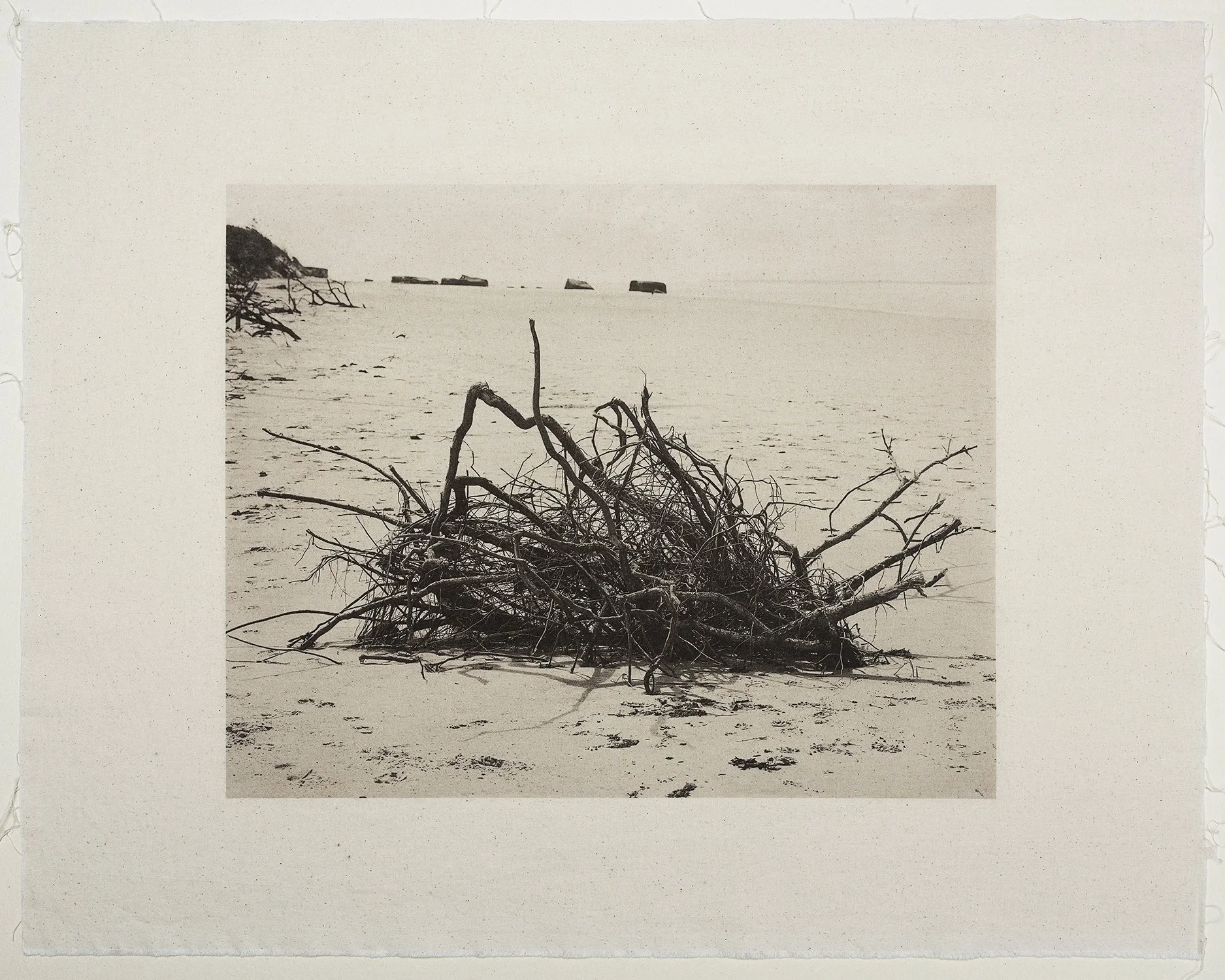
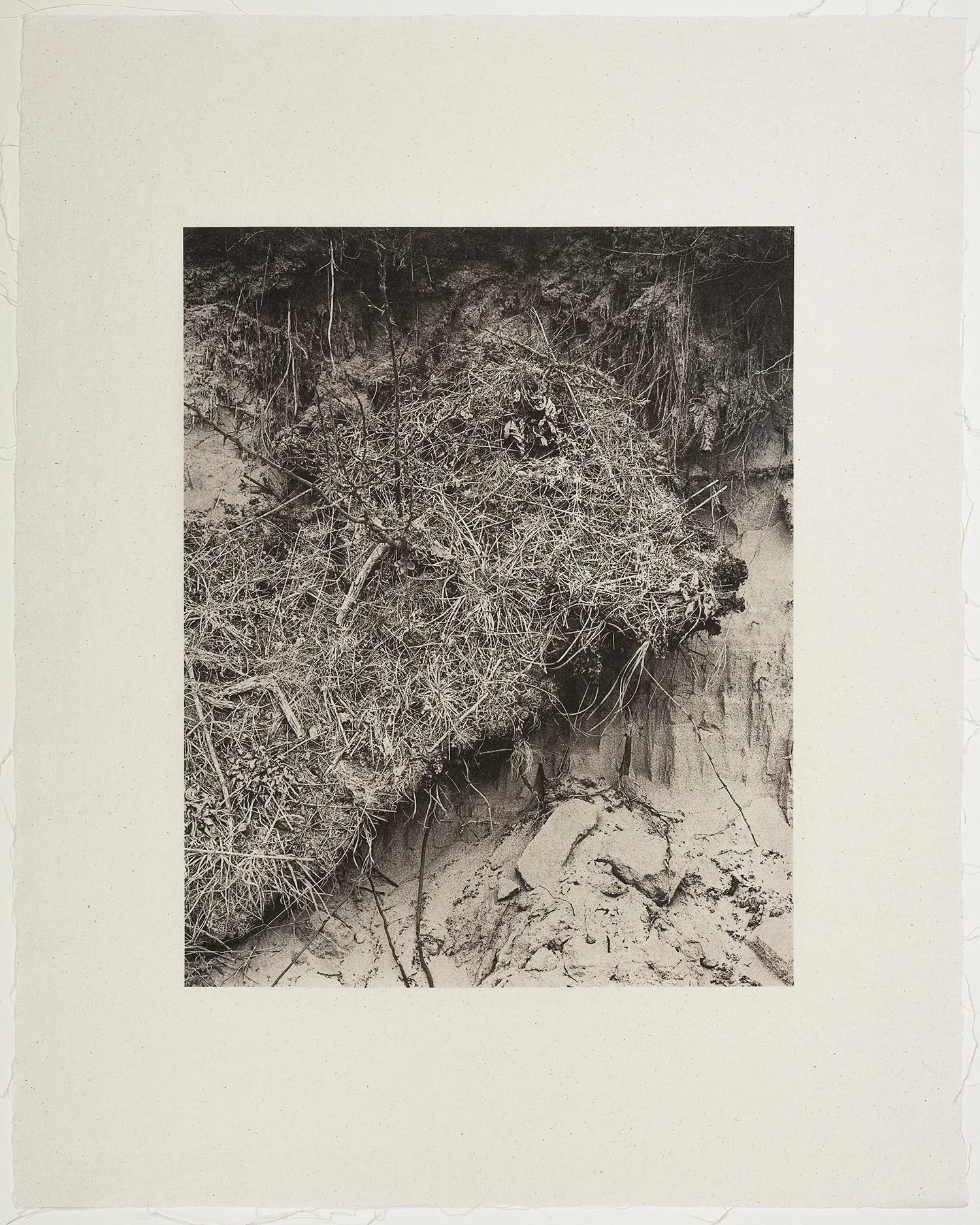
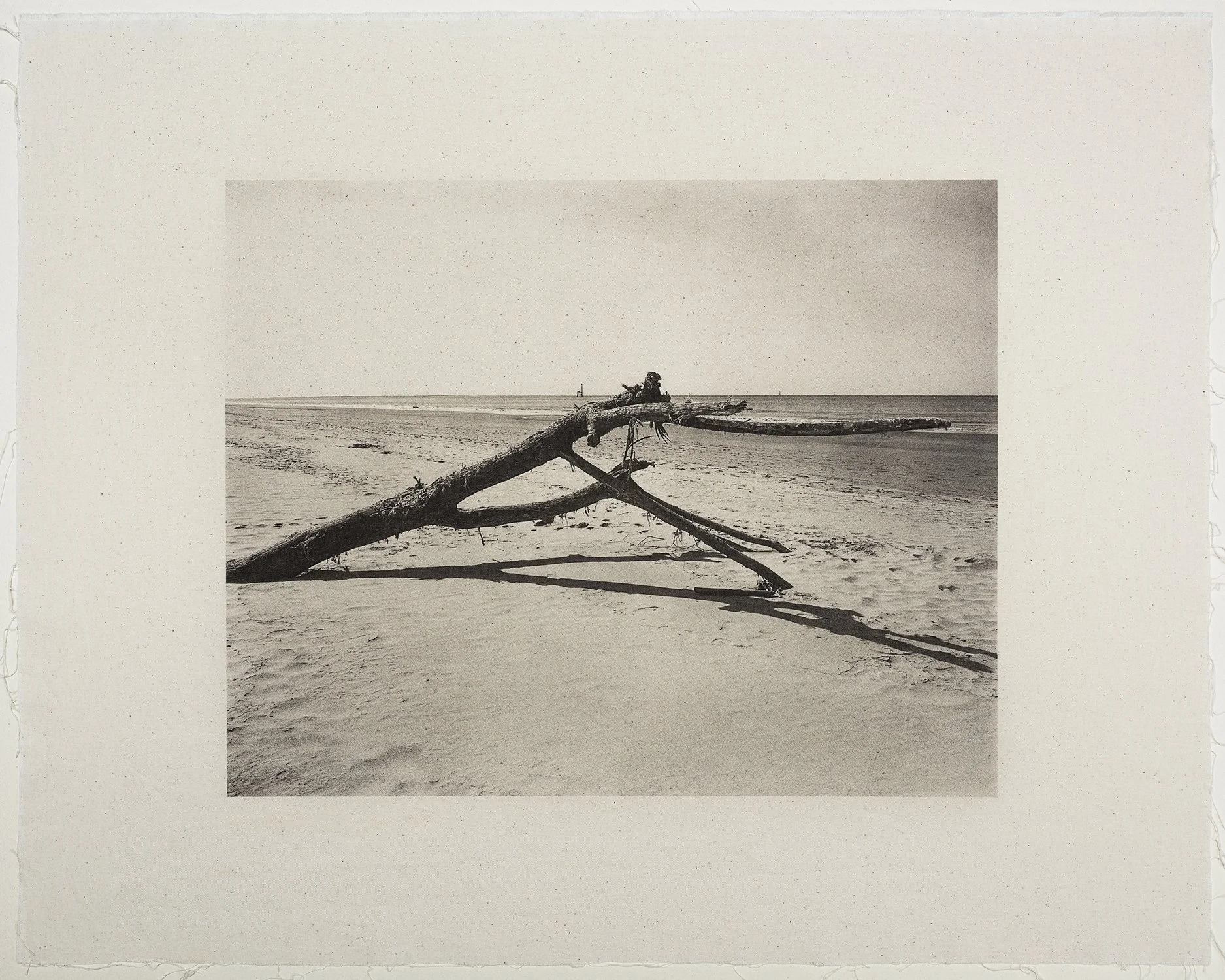
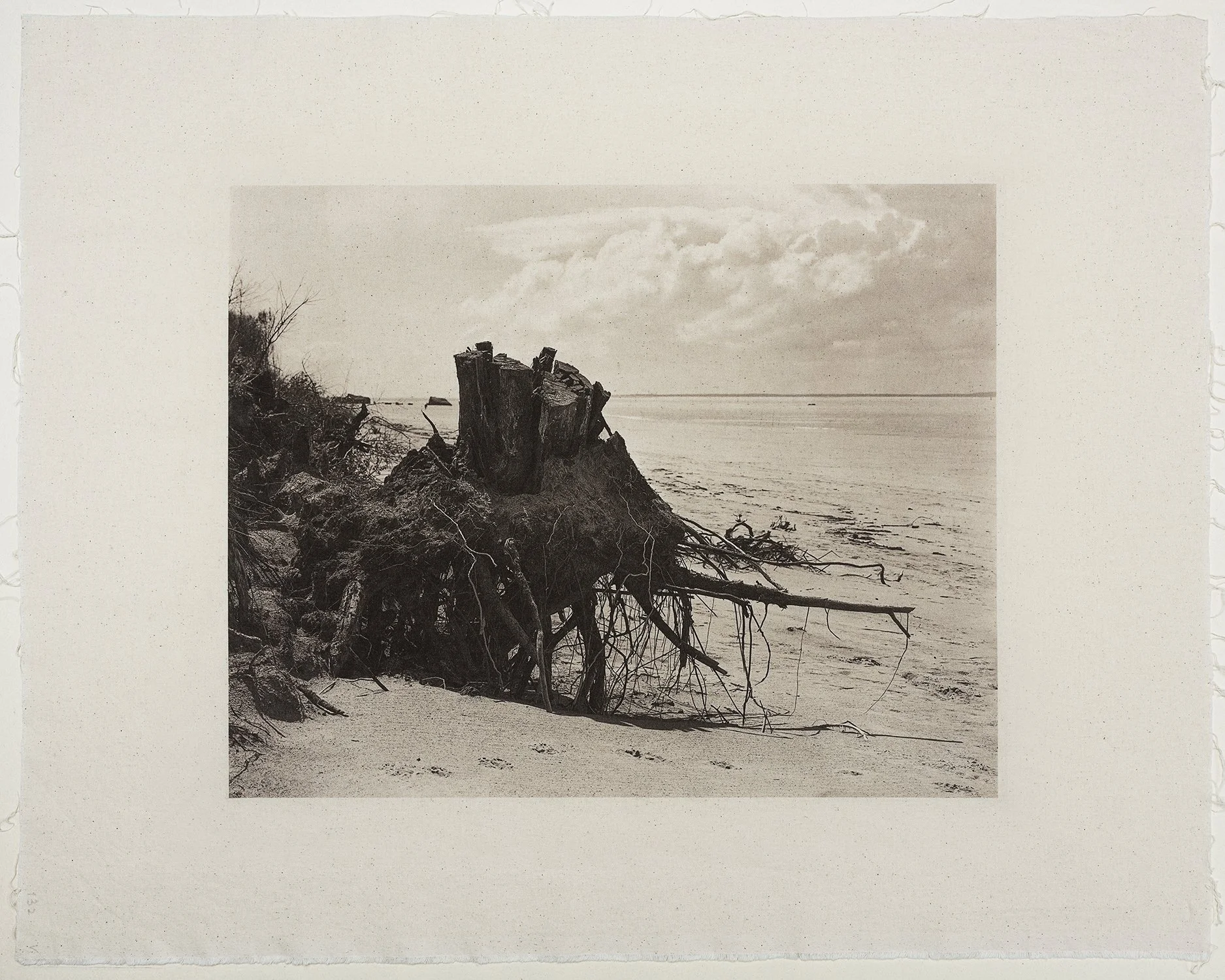
À la frontière entre l’océan et la forêt, sur environ trois kilomètres de côte, de la plage des Combots jusqu’à Saint-Palais-sur-Mer, le paysage s’érode et se recompose continuellement. Les arbres fragilisés par le recul du littoral finissent par tomber sur la plage, parfois jusqu’à l’océan, emportés par la force des vagues et du vent. Cette transformation progressive s’opère souvent dans le silence.
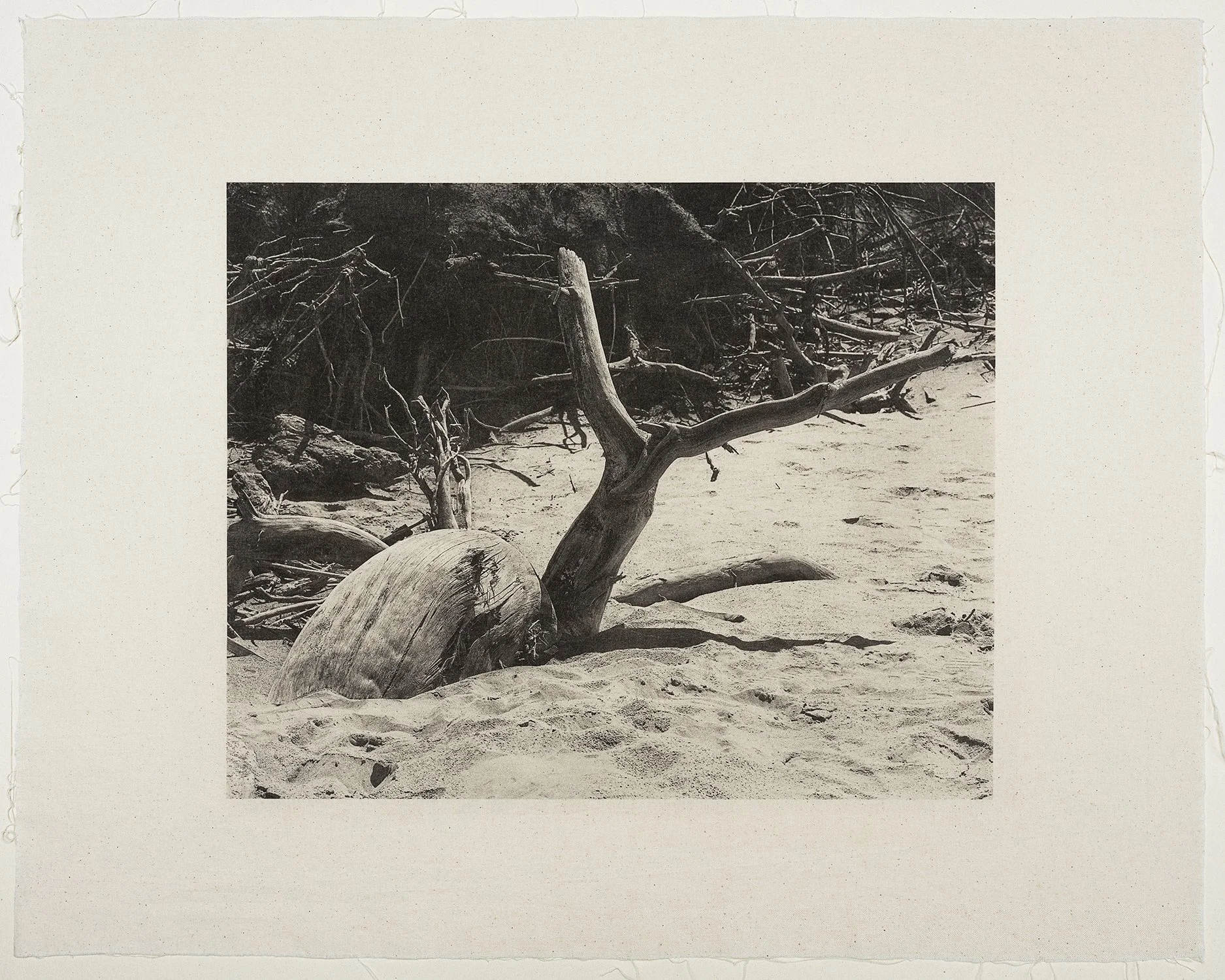
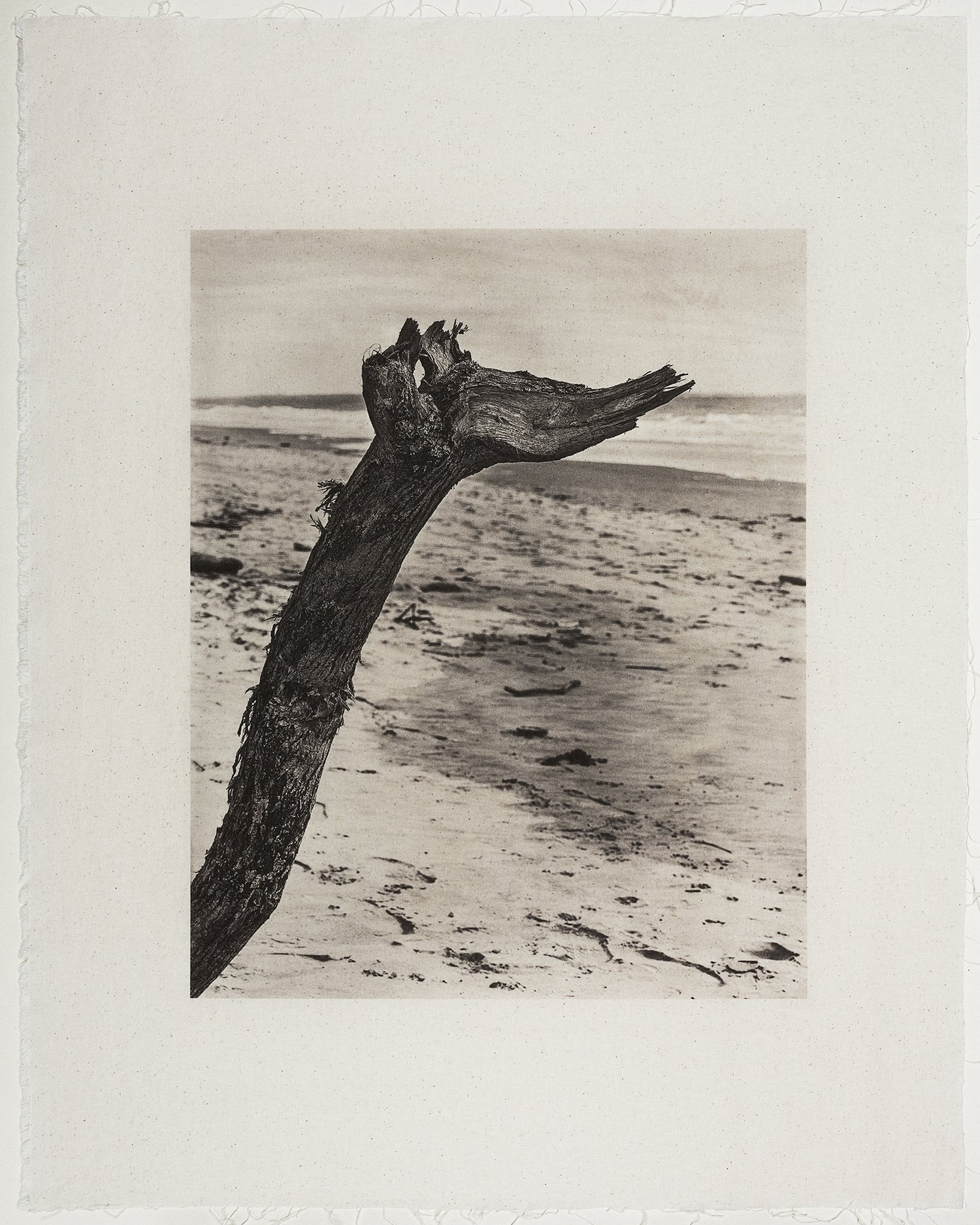
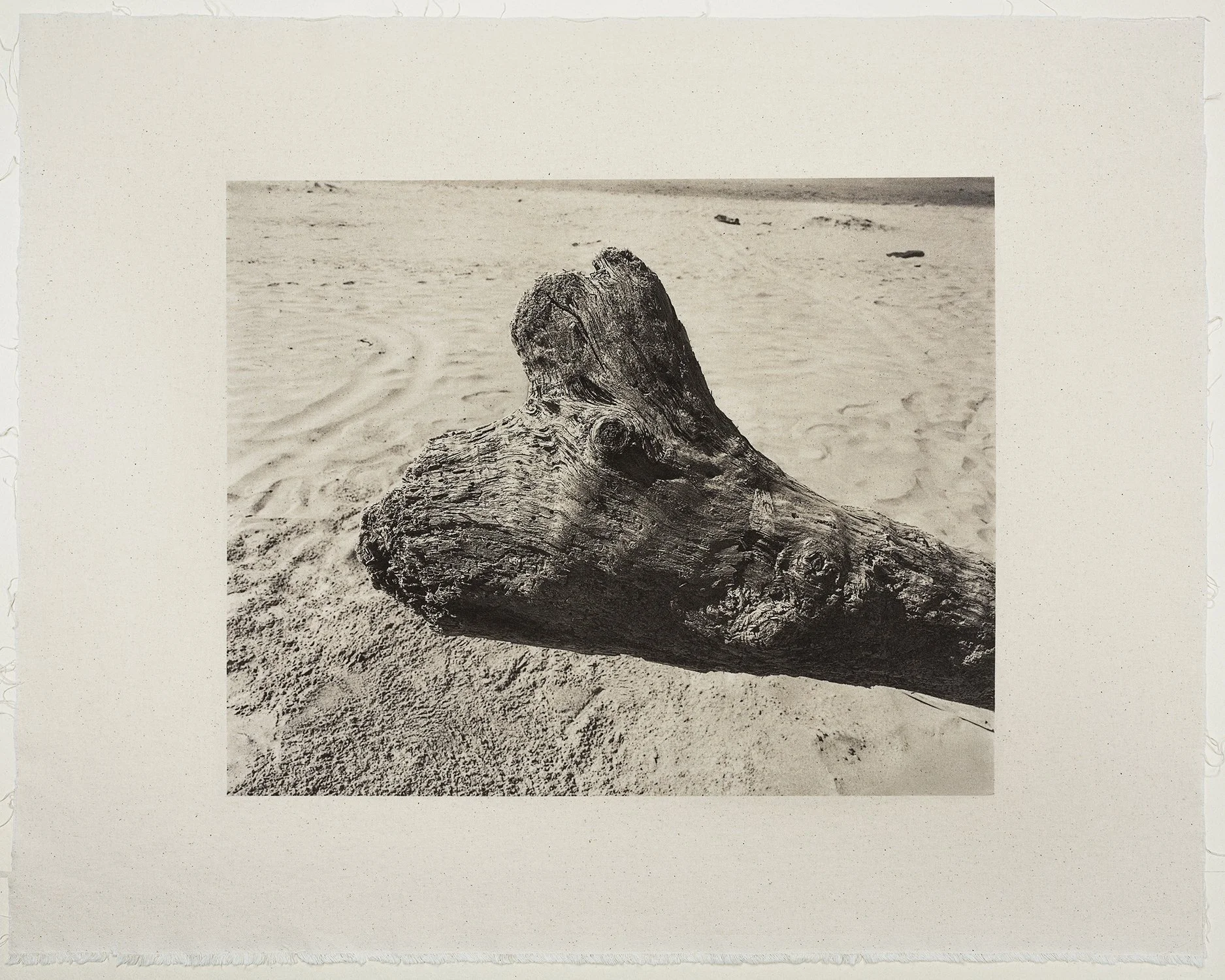
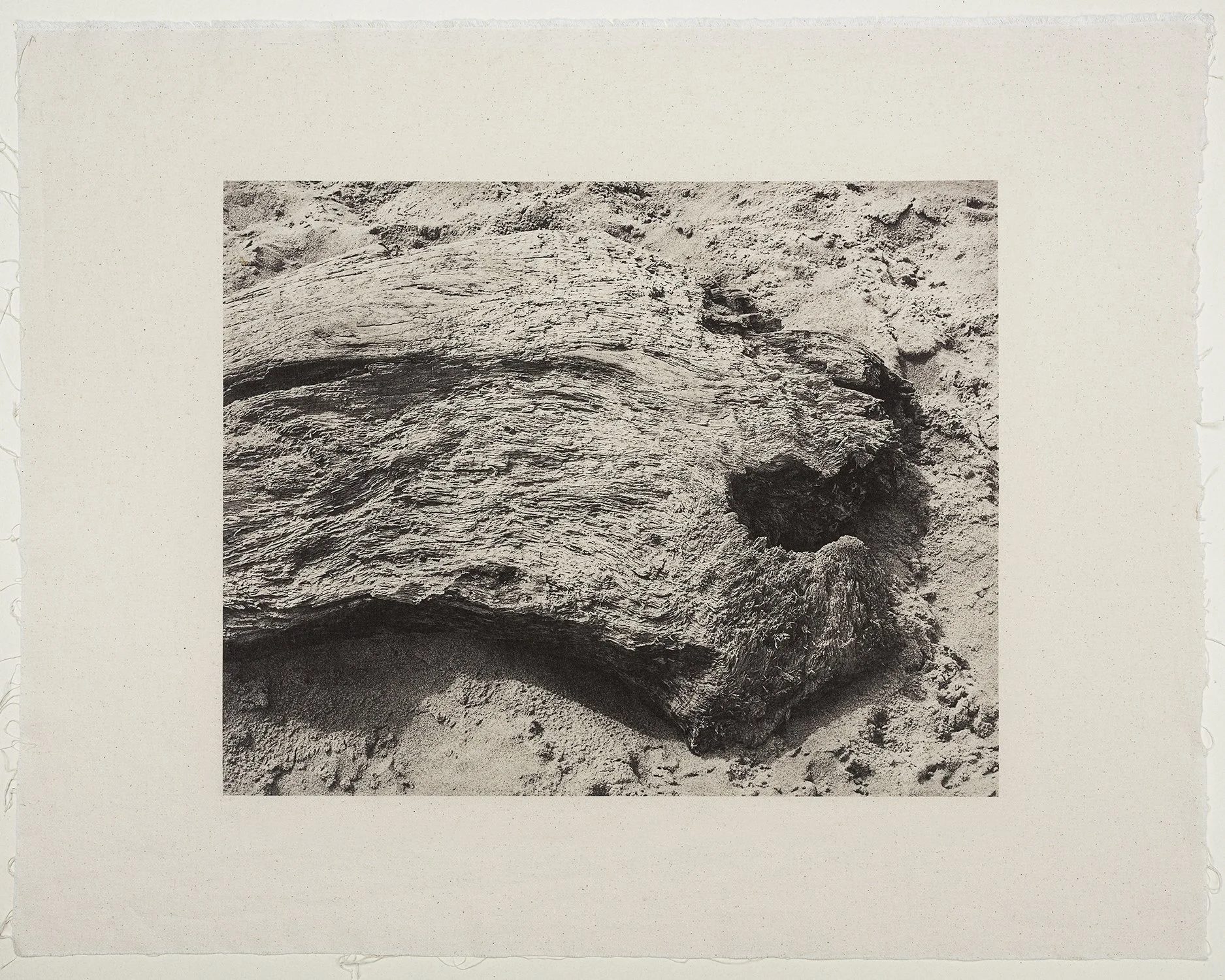
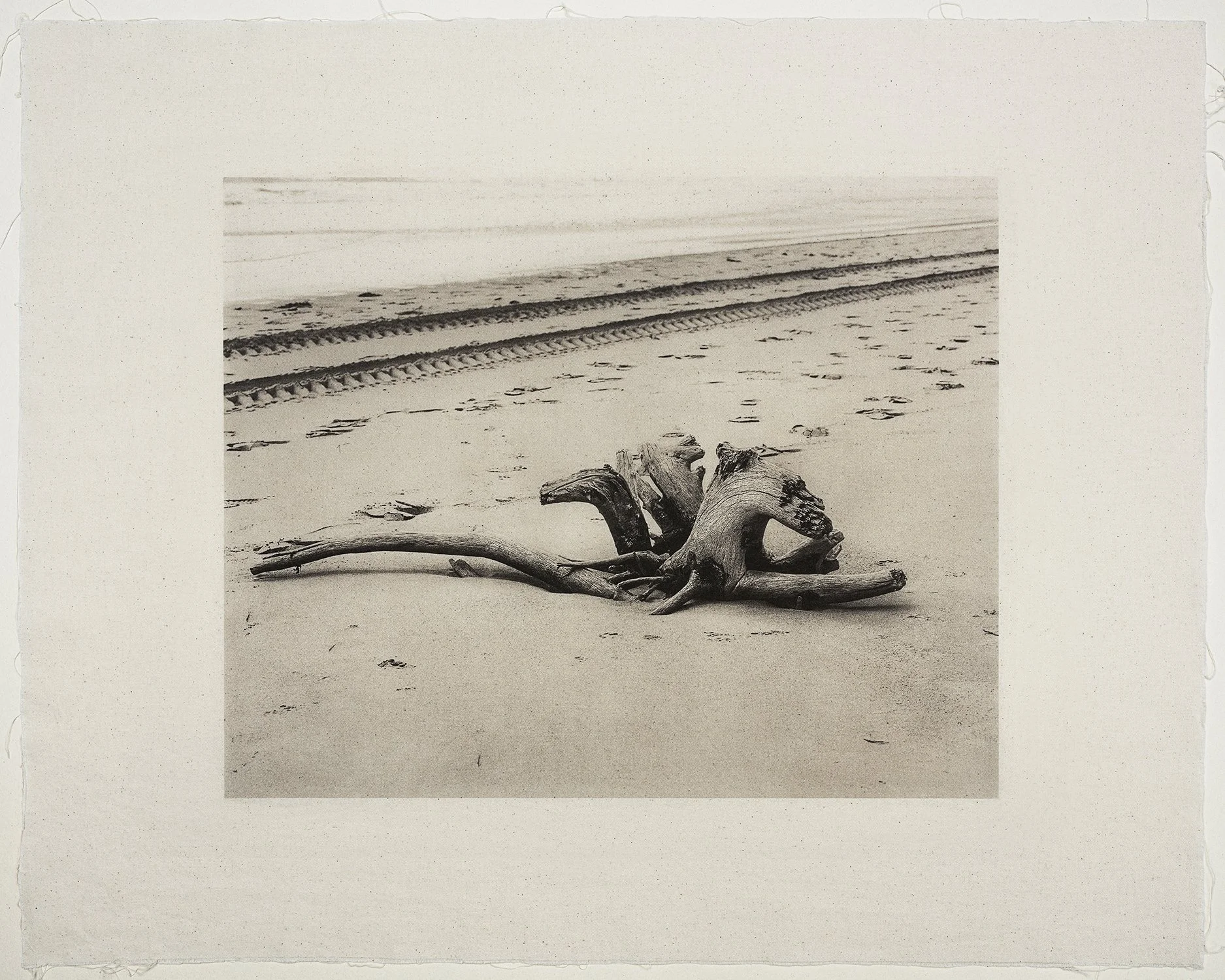
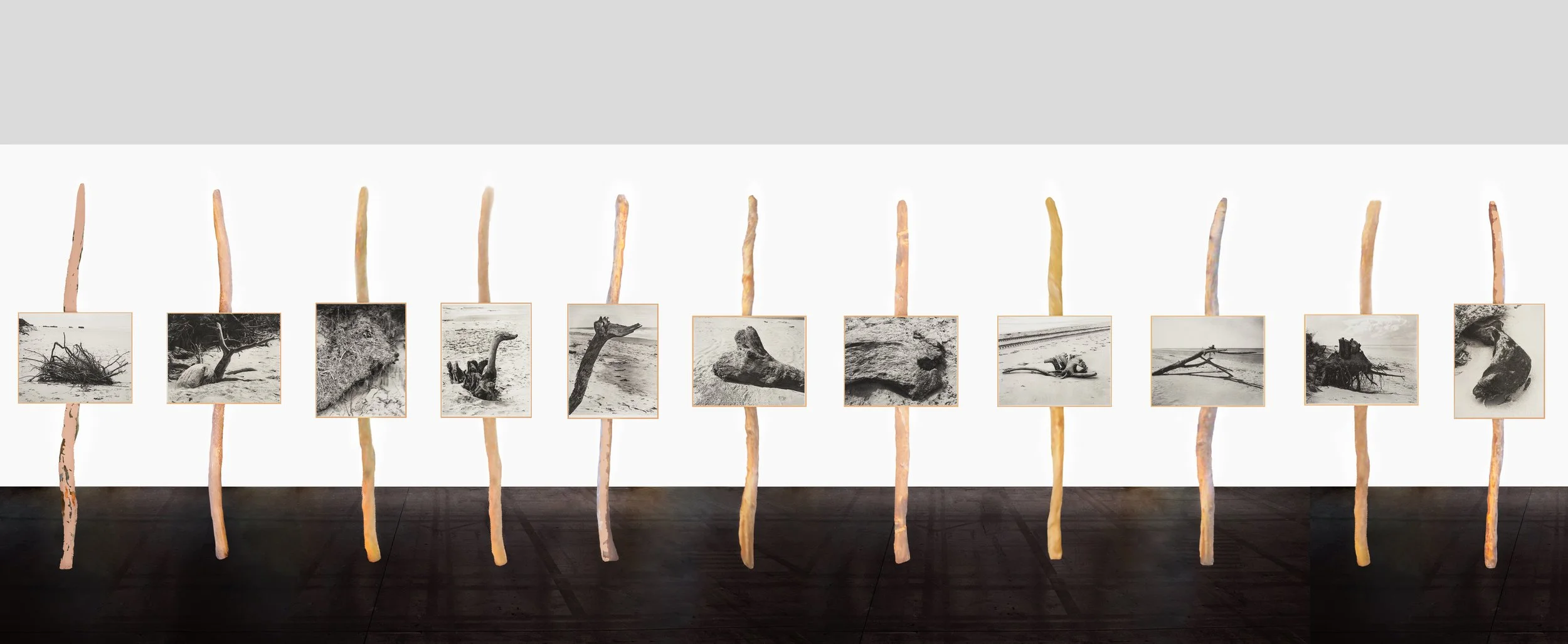
Arbres déracinés, branches brisées, débris rejetés par la mer : un paysage familier perd ses contours et cesse d’occuper une place fixe. Ce territoire en transformation constitue le point de départ de « Les Animaux fantastiques », une série photographique réalisée à la chambre grand format 4 × 5 pouces entre 2024 et 2026.
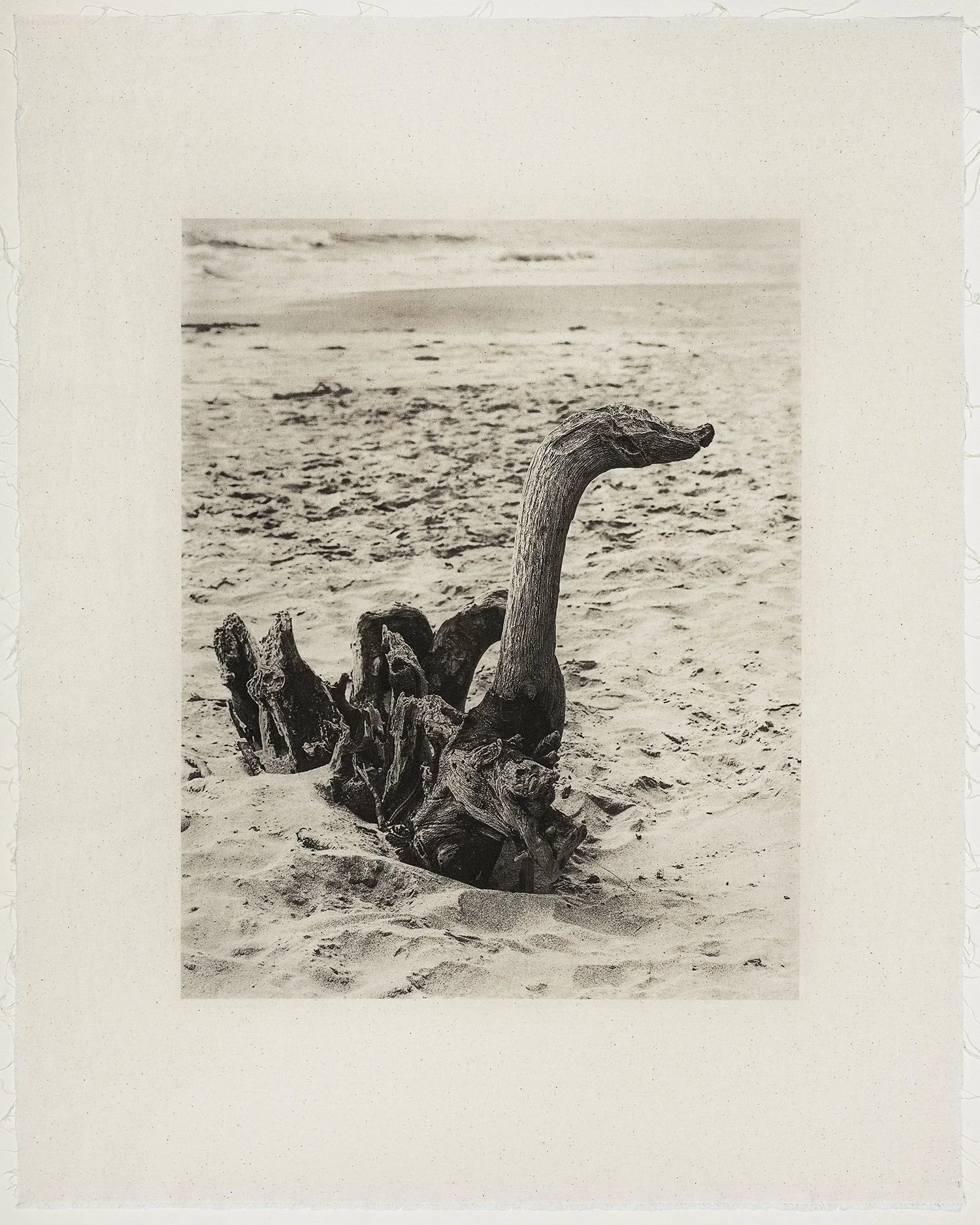
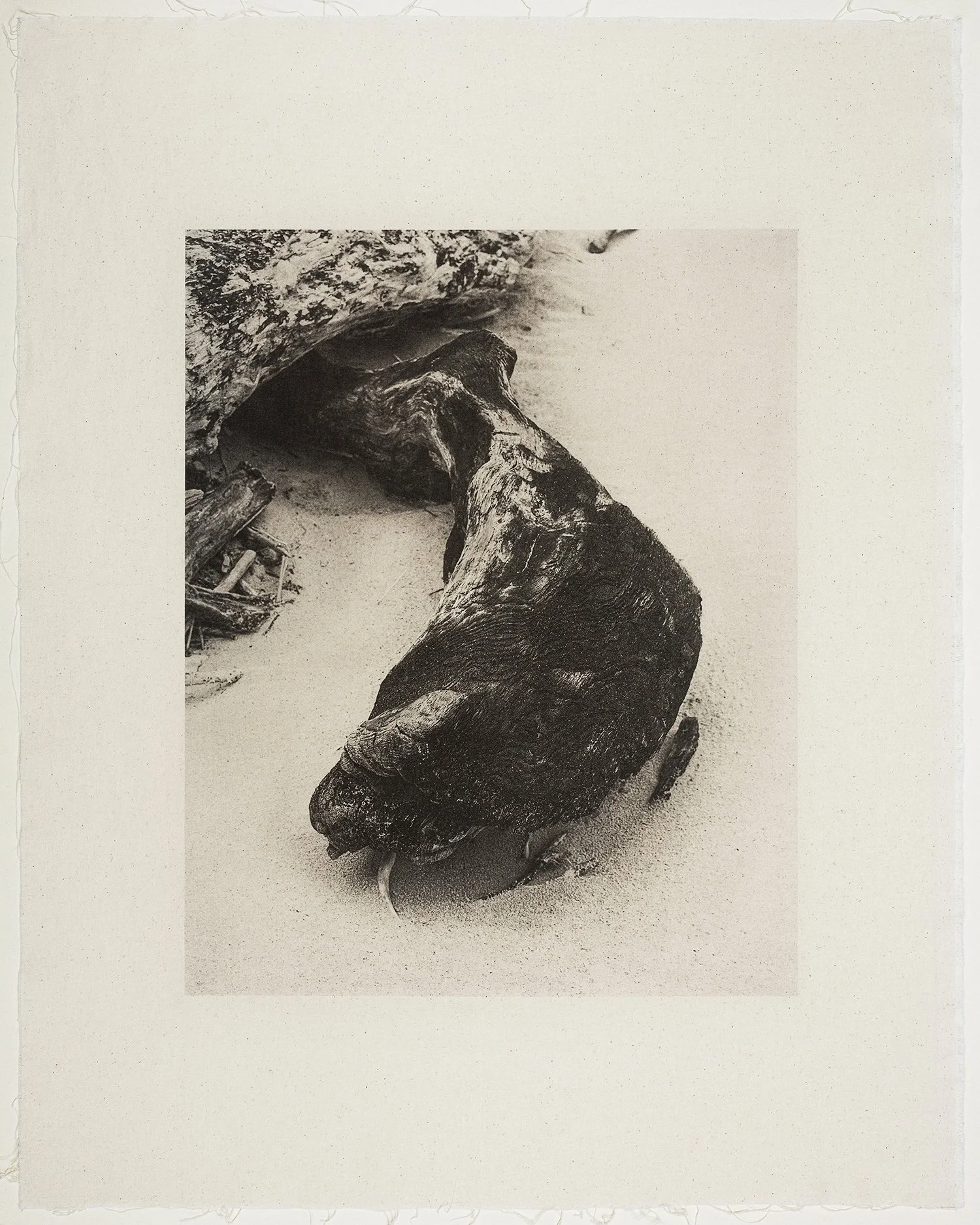
Sur la plage, les racines et les fragments de troncs s’entrelacent, se déforment et composent des figures indéfinissables. Elles évoquent des formes animales — canard, cheval, éléphant, escargot, girafe, lama, léopard, mante religieuse, phoque, souris ou vache — que l’on croit reconnaître sans jamais pouvoir les identifier avec certitude. Entre le végétal et l’animal, le familier et l’étrange, ces formes semblent surgir d’un paysage bouleversé.
Ces figures ne sont pas des créatures imaginaires ajoutées à la nature. Elles émergent de la matière même du paysage, de ses ruptures et de ses métamorphoses. Par le cadrage photographique, les fragments de bois deviennent presque sculpturaux : leurs textures, leurs volumes et leurs entrelacements ouvrent un espace où la perception oscille entre observation et imagination.
L’érosion apparaît alors non seulement comme une force de destruction, mais aussi comme un processus de transformation qui révèle des formes jusque-là insoupçonnées. La disparition progressive d’un paysage familier fait émerger d’autres manières de voir, tandis que les figures animales semblent témoigner de la persistance du vivant au sein même des lieux fragilisés.
Avec « Les Animaux fantastiques », j’observe cet instant de seuil où le paysage se défait et se recompose. La série interroge notre rapport à une nature que nous percevons souvent comme un décor stable, alors qu’elle demeure en mouvement, vulnérable et imprévisible. Elle invite à regarder autrement ce qui disparaît, mais aussi ce qui apparaît dans les transformations du monde naturel.
La nature n’est plus un décor : elle se transforme et fait surgir, dans le silence, des formes nouvelles.
En)
Fantastic Animals
Based in Royan, on the French Atlantic coast, I am attentive to the transformations of the coastline, shaped by the sea and subject to the combined effects of natural processes and environmental changes.
At the boundary between the ocean and the forest, along approximately three kilometres of coastline stretching from Plage des Combots to Saint-Palais-sur-Mer, the landscape is continuously eroded and reshaped. Trees weakened by coastal retreat eventually fall onto the beach, sometimes reaching the ocean, carried away by the force of the waves and the wind. This gradual transformation often takes place in silence.
Uprooted trees, broken branches, debris washed ashore by the sea: a familiar landscape loses its contours and ceases to occupy a fixed place. This changing territory is the starting point for Fantastic Animals, a photographic series created between 2024 and 2026 using a large-format 4 × 5-inch camera.
On the beach, roots and fragments of trunks intertwine, become distorted, and form indistinct figures. They evoke animal shapes — a duck, a horse, an elephant, a snail, a giraffe, a llama, a leopard, a praying mantis, a seal, a mouse or a cow — that we think we recognise but can never identify with certainty. Between the vegetal and the animal, the familiar and the strange, these forms seem to emerge from a disrupted landscape.
These figures are not imaginary creatures added to nature. They emerge from the very material of the landscape, from its ruptures and metamorphoses. Through photographic framing, fragments of wood become almost sculptural: their textures, volumes and interwoven structures open up a space in which perception oscillates between observation and imagination.
Erosion thus appears not only as a destructive force, but also as a process of transformation that reveals previously unsuspected forms. The gradual disappearance of a familiar landscape gives rise to new ways of seeing, while the animal figures seem to bear witness to the persistence of life within these fragile environments.
Through Fantastic Animals, I observe this threshold moment in which the landscape disintegrates and takes shape anew. The series questions our relationship with a nature we often perceive as a stable backdrop, even though it remains in motion, vulnerable and unpredictable. It invites us to look differently at what disappears, but also at what emerges through the transformations of the natural world.
Nature is no longer a backdrop: it transforms and brings forth new forms in silence.